
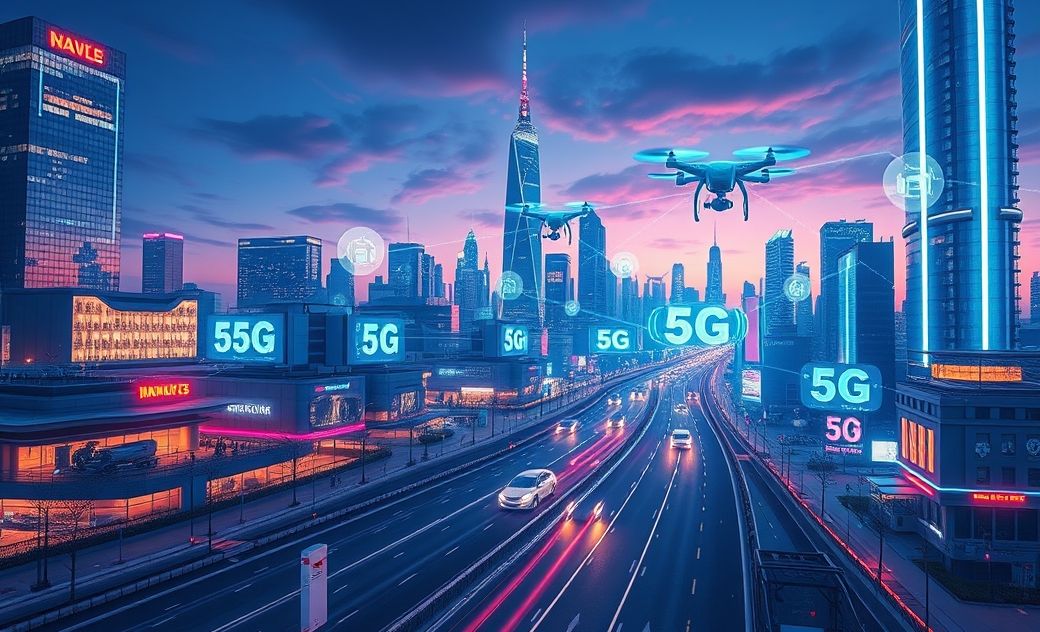
The rapid evolution of technology has been a defining characteristic of the 21st century, with the introduction of 5G playing a pivotal role in reshaping and advancing innovations across the Internet of Things (IoT). As the latest generation of mobile network technology, 5G offers unprecedented speed, significantly reduced latency, and the ability to support a massive number of connected devices seamlessly. These attributes are critical in propelling IoT innovations, facilitating new applications, and enhancing existing platforms.
Enhancement of Connectivity
One of the most significant contributions of 5G to IoT is the enhanced connectivity it provides. This is not limited to higher speeds but extends to more reliable and robust connections that can support a vast array of devices simultaneously. In the IoT ecosystem, where diverse devices continuously communicate, maintaining consistent and efficient connectivity is vital.
Support for Massive Machine-Type Communications (mMTC)
5G technology is designed to handle the demands of massive machine-type communications, which is instrumental for IoT. This encompasses scenarios where a large number of devices, ranging from industrial sensors to household gadgets, are interconnected. The ability of 5G to support mMTC ensures that these devices remain connected without performance degradation, which is crucial for sectors like smart cities and industrial automation.
Low Latency and Real-Time Applications
Latency, the time it takes for data to travel from its source to its destination, is a critical factor that 5G substantially improves upon. The reduced latency of 5G networks makes real-time applications feasible in IoT. This is essential for applications such as autonomous vehicles and remote surgeries where real-time data transmission and response are pivotal.
Enabling New IoT Use Cases
5G’s introduction is not just about enhancing current IoT functionalities; it also paves the way for novel use cases that were previously not possible. The combination of high speed, increased capacity, and low latency inspires innovation and creativity, driving the development of new applications and services.
Smart Cities and Infrastructure
5G technology is a key enabler for the development of smart cities, with IoT devices scattered across urban landscapes. These devices require seamless connectivity to manage resources efficiently, from traffic light systems that adapt to real-time traffic conditions to smart grids that optimize energy distribution. The integration of 5G ensures these IoT systems operate smoothly without connectivity issues, facilitating smarter, safer, and more efficient cities.
Healthcare Innovations
The healthcare sector is another area where 5G significantly impacts IoT innovations. With the growing reliance on wearable devices for health monitoring, 5G ensures data from these devices is transmitted quickly and reliably to healthcare providers. Moreover, innovations such as telemedicine and remote surgeries benefit from 5G’s capabilities, providing a foundation for more responsive and accessible healthcare services.
Challenges and Opportunities
While the potential of 5G in advancing IoT innovations is immense, it also presents unique challenges and opportunities that need to be addressed. Stakeholders must navigate issues related to privacy, security, and infrastructure development to harness the full power of 5G in IoT applications.
Ensuring Security and Privacy
The increased connectivity and number of devices introduce significant security and privacy concerns. Protecting the data shared across IoT networks is crucial as it involves sensitive personal and organizational information. Implementing robust security measures and regulations is vital to protect against potential breaches and ensure user trust.
Infrastructure Development
The rollout of 5G requires substantial investments in infrastructure, including the installation of more cell towers and the upgrade of existing network components. Governments and businesses must collaborate to overcome these logistical hurdles and facilitate the smooth adoption of 5G technology, ensuring widespread access and maximizing its benefits for IoT.
In conclusion, the role of 5G in advancing IoT innovations is transformative, offering significant improvements in connectivity, enabling new applications, and presenting opportunities for diverse sectors. While challenges exist, addressing them proactively will ensure that 5G can successfully drive the next wave of IoT advancements, reshaping society’s digital landscape.
